
How Wi-Fi 7 Delivers Happier Tenants and Stronger Small Businesses

Step into any apartment building, coffee shop, or coworking space, and your device is instantly bombarded with a list of Wi-Fi networks. But here’s the real question: How many of them can keep up with today’s hyper-connected world?
In densely connected environments, such as multi-dwelling units (MDUs), the strain on Wi-Fi networks is increasing. On average, home Wi-Fi networks are juggling 17 or more devices—from smart TVs and laptops to IoT devices and gaming consoles—all competing for bandwidth. For MDUs, multiply that by the number of building units, and you also increase the possibilities for interference, congestion, dropped connections, and frustrated users.
For small businesses, the stakes are even higher. A flaky connection doesn’t just mean buffering; it means frozen video calls, failed POS transactions, and lost revenue. If the business offers public connectivity (such as a coffee shop, restaurant, or event venue), that unreliable connection could be detrimental to repeat visits.
What may be working today will certainly face ongoing challenges as connectivity requirements continue to evolve. How can you help set up MDUs and small businesses for success in the future?
A plan to implement Wi-Fi 7 can effectively address most concerns without necessitating abrupt network architecture changes.
Wi-Fi 7 opens a wide, reduced-interference lane on the wireless highway by unlocking the 6 GHz spectrum. With support for 320 MHz channels and multi-link operation, Wi-Fi 7 delivers lightning-fast speeds, lower latency, and seamless failover—ensuring that traffic can reroute around congestion in real time.
Because Wi-Fi 7 enables devices to transition to the 6 GHz band, antenna power on the 2.4 and 5 GHz bands can be reduced without compromising coverage.
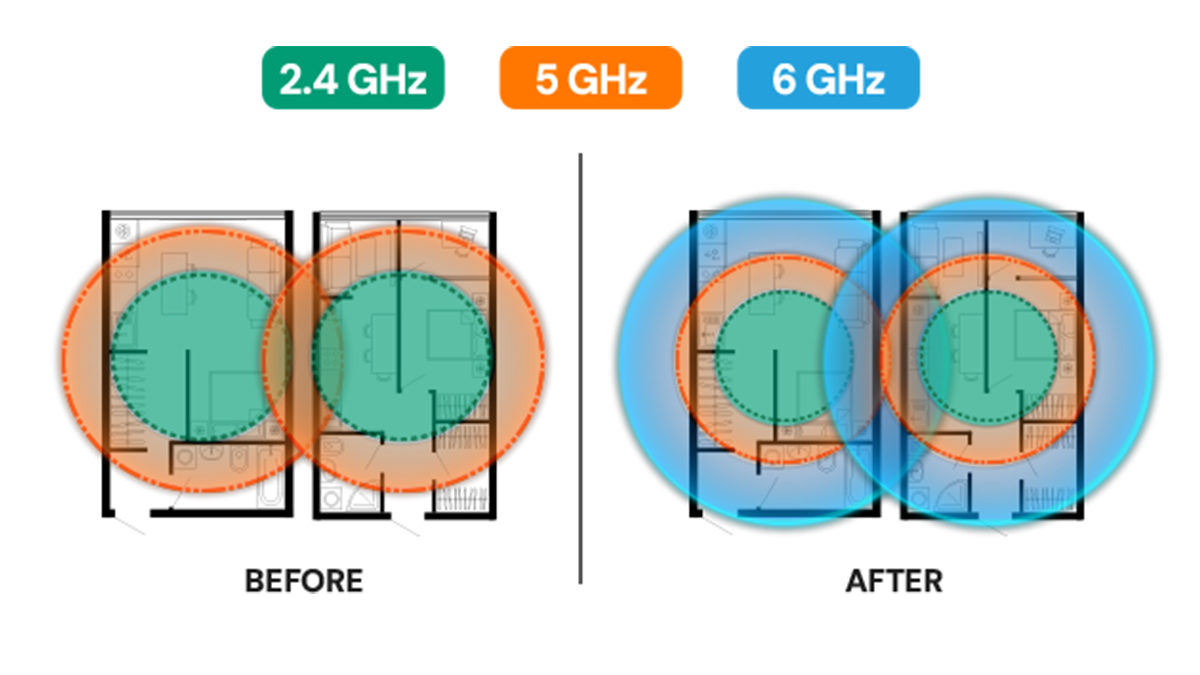
This minimizes signal “bleed” between neighboring apartments or offices, dramatically improving performance.
For apartment dwellers, it means more reliable Wi-Fi even in densely packed buildings. For small businesses, it means critical systems, such as payment terminals and conferencing platforms, run without interruption.
A Platform for Enhanced Small Business and MDU Wi-Fi 7 Experiences
Wi-Fi 7 also enables broadband service providers (BSPs) to deliver a fully managed Wi-Fi experience. The Calix Broadband Platform offers a single, unified platform for deploying, managing, and optimizing Wi-Fi 7 at scale. The platform’s intelligent infrastructure ensures peak network performance and simplifies the integration of Wi-Fi 7 systems by using cloud-based automation to reduce operational complexity.
What’s more, the Calix platform supports managed services purpose-built for MDUs and small businesses. Calix SmartMDU™ provides a scalable, simple, secure, and personalized managed Wi-Fi solution to flexibly address the growing connectivity needs of the MDU market. Meanwhile, Calix SmartBiz™ is an integrated solution that offers multiple managed Wi-Fi networks, security, network resiliency, simple management, and a brandable customer Wi-Fi portal. This enables BSPs to deliver critical small business services cost-effectively and at scale.
Together, these solutions help BSPs scale, differentiate, and meet the exact needs of their customer segments. Additionally, with the introduction of new Wi-Fi 7 systems—such as the Calix GigaPro® 7p6—MDUs and small businesses can leverage the very latest Wi-Fi technology.
The Opportunity Is Now—Anticipate Small Business and MDU Needs
Wi-Fi 7 is quickly becoming a mass-market standard. The number of 6GHz-enabled Wi-Fi devices (including Wi-Fi 6E and Wi-Fi 7) shipped annually to North America is projected to increase significantly—from 95 million in 2024 to 367 million by 2029—a 288 percent increase over five years.
Stay ahead of the game with Calix and Wi-Fi 7, proactively delivering the coverage, capacity, and performance that MDU tenants and small businesses expect—before they even ask for it.
Learn more about how to easily deploy Wi-Fi 7 in our eBook, “Operationalizing Wi-Fi 7: Strategies for Seamless Deployment and Management.”

Frequently asked questions about how Wi-Fi 7 delivers stronger small businesses
Dense buildings increase interference, congestion, and dropped connections as device counts rise. Wi‑Fi 7 improves capacity and performance by unlocking 6 GHz, supporting wider channels, and managing traffic more efficiently in high‑density spaces.
Small businesses rely on always-on connectivity for POS transactions, conferencing, and guest access. Wi‑Fi 7 helps reduce latency and instability that causes frozen calls, payment failures, and lost revenue—making connectivity a business continuity factor.
Wi‑Fi 7 leverages 6 GHz for cleaner spectrum and less interference, and supports wide channels and multi‑link operation. Devices can shift to 6 GHz, reducing congestion and “signal bleed” between neighboring units or offices.
A unified platform approach simplifies deployment, optimization, and support. The Calix Broadband Platform supports managed services for MDUs and small businesses, including SmartMDU and SmartBiz, enabling consistent operations and scalable experiences.
Related Articles