
GPON technology
GPON delivers fiber to the home and business
What is GPON? GPON (Gigabit Passive Optical Network) is the leading fiber access technology for delivering gigabit internet services to residential and business subscribers. An all-fiber technology, GPON is used to build Fiber to the Premises (FTTP)—also known as Fiber to the Home (FTTH)—networks that connect subscribers to the local ISP serving office.

GPON's point-to-multipoint architecture shares fiber across multiple subscribers, making it the most cost-efficient option for building FTTH networks.

GPON delivers the high-capacity bandwidth needed to support streaming video, online applications, and the growing number of connected devices in every home and business.

Subscribers gain the high-speed bandwidth they need for today's applications, while reliable fiber connectivity can increase the value of the properties they own or rent.
Technology detail
How do I know that GPON is right for my network?
GPON (Gigabit Passive Optical Network) is a point-to-multipoint technology that connects an Optical Line Terminal (OLT) to many Optical Network Terminals (ONTs) or Optical Network Units (ONUs). A GPON network utilizes passive splitters between the OLT and ONT to split the wavelength so all ONTs on the fiber can see it.
The GPON standard specifies up to 128 splits can be on a single GPON port, but traditional GPON deployments use 1:32 or 1:64 way splits. GPON uses separate wavelengths to transmit and receive traffic (1490nm in the downstream and 1310nm in the upstream directions). The OLT broadcasts all traffic downstream to every ONT on the PON (passive optical network) and each ONT only reads the content that is addressed to it. Encryption is used to prevent ONTs from eavesdropping on traffic not addressed to them. In order to ensure upstream traffic from the ONTs does not collide on the PON, the OLT coordinates transmission from the ONTs using time division multiplexing (TDM) such that ONTs will only transmit in their assigned timeslots.
The key to the widespread adoption of GPON is its remarkable flexibility. GPON delivers RF video and IPTV, TDM voice and VoIP. It can also deliver symmetric 10/100/1000 Ethernet and TDM or PWE3 (Pseudowire Emulation) based T1/E1 services.
The flexibility with GPON continues with how the service provider can lay out the network. For instance, the split ratio can be very low allowing for longer distances (as high as 40km) and more bandwidth per subscriber or the split ratio can be up to 128 splits enabling more subscribers over shorter distances. Techniques like DBA (dynamic bandwidth allocation) are included in GPON to enable subscribers to get more bandwidth as needed and free up unused bandwidth for other subscribers.
ONTs are installed at the subscriber premises. Residential ONTs have been traditionally installed on the outside of the home, but in recent years the trend has been to install them in a central location inside the home. The ONT is the demarcation point of the GPON service and is connected to the OLT through the PON. The residential installations can have ONTs that include the home gateway/router, POTS (Plain Old Telephone Service) or VoIP (voice over IP) ports and Wi-Fi functionality.
Before PON, broadband was delivered over the same copper lines used for POTS services. As copper infrastructure ages, maintenance costs continue to climb. Fiber, while more expensive to install upfront, has a lifespan that will outlast any services we can anticipate running over it.
Because a PON network is passive by design, OSP maintenance costs are typically limited to repairs when a fiber break or natural disaster occurs—eliminating the ongoing expense of powered outdoor equipment. New directional boring technologies are also helping to reduce fiber installation costs, and burying the fiber further lowers the likelihood of future maintenance and repair expenses.
Service providers that are fiber-constrained in the OSP can run a single fiber to a location and split it closer to subscribers, reducing the need for long, diverse fiber runs. The total distance between the OLT and ONT can reach up to 40km by reducing the split ratio on the PON.
Together, the passive network architecture, point-to-multipoint fiber efficiency, and extended reach can save service providers thousands of dollars in outside plant cabinet and powering costs.
GPON conforms to the ITU G.984 standard which includes amendments for Extended Reach GPON. G.984 was developed to support higher data rates compared to earlier PON technologies like BPON and EPON. GPON also provides better QoS and scalability compared to its predecessor technologies.
With features such as DBA, GPON has become the solution of choice for Gigabit service providers worldwide. GPON has been defined in the standard to enable deployment of broadband services using Broadband Forum TR-156 Using GPON Access in the Context of TR-101 making it fully compatible with existing access networks worldwide.
The subscriber demand for bandwidth and an excellent experience continues to grow at a very high rate. Fiber is a technology that truly enables the speed of light in the OSP and therefore enables a service provider to future proof their OSP. GPON has a long life ahead of it, because of its superior QoS and dynamic bandwidth allocation capabilities.
In addition, the ITU took great care in defining next-generation PON standards to ensure that technologies such as XG-PON, XGS-PON, and NG-PON2 would not overlap wavelengths with GPON or other capabilities like RF to ensure a network that will grow with service provider needs.
Products and services
Related capabilities from Calix

The expansive GigaSpire® portfolio enables communications service providers to deliver exceptional subscriber experiences and expand their business into new markets—quickly.

A hardened outdoor tri-band Wi-Fi 6E appliance bringing exceptional connectivity, speed, and wireless coverage to some of the most challenging environments.

Take the subscriber experience beyond the home—delivering the same reliable, premium connectivity to businesses and communities.

Bring 100G, high-density OLT, aggregation, and subscriber management together to help you transform and simplify your existing or new access network.
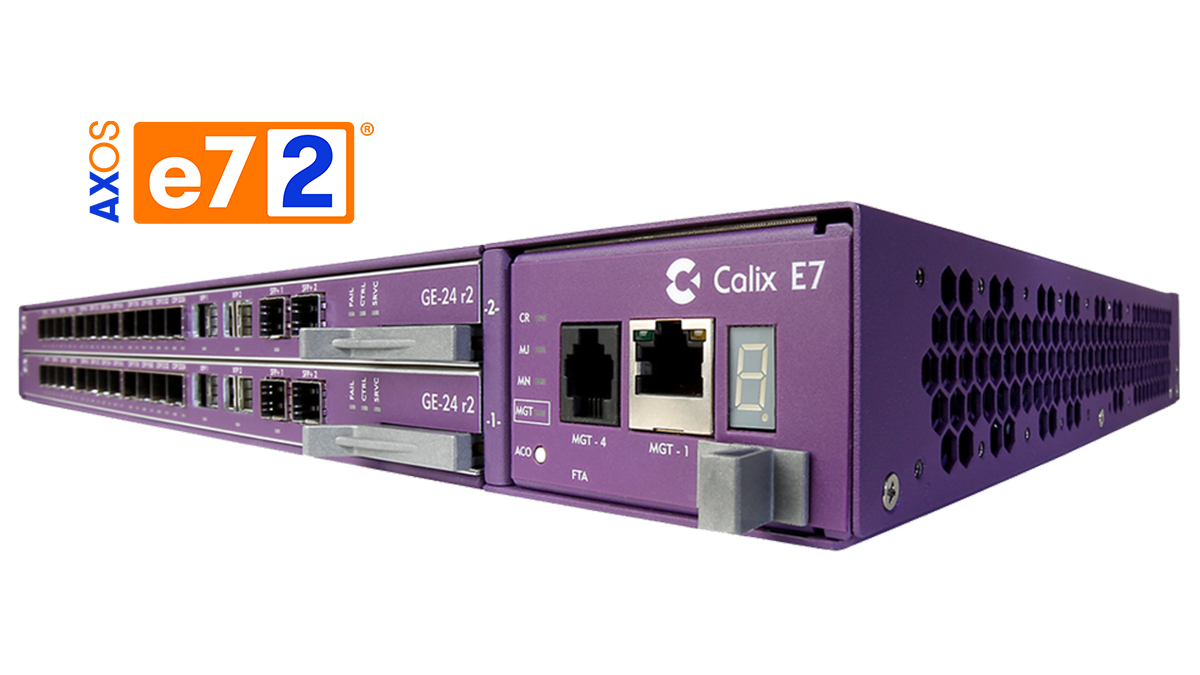
Deploy the bandwidth you need now, with the flexibility to easily keep pace with accelerating change.

Eliminate deployment complexity and simplify your business with this multi-faceted FTTH network expansion solution.

Reduce risk, scale your team, and accelerate the deployment of advanced solutions—while overcoming barriers to business transformation.

Meet the diverse training needs of your employees with flexible education solutions for deploying, configuring, maintaining, and growing broadband networks.

Value-added resources and expert guidance to achieve and exceed objectives, accelerate time-to-value, and obtain maximum return on cloud, premises, and access investments.