
10G-PON Technology
The right 10G-PON solution for your network, at the right time
10G-PON builds on your existing fiber investment, letting you introduce faster speeds and new services gradually—without disrupting what's already working for your subscribers.


10G-PON uses fiber-optic cable to deliver very high-capacity connections to multiple subscribers simultaneously—providing the bandwidth needed to support today's demanding applications and tomorrow's emerging services.

XGS-PON is designed to simplify deployment and upgrades, reducing the time and cost of bringing new services to market so your subscribers can enjoy faster speeds in days, not weeks.

XGS-PON, NG-PON2, and GPON can co-exist on the same fiber, allowing you to introduce 10G-PON into your existing network without disrupting current services or replacing your optical distribution infrastructure.
Technology detail
Why choose XGS-PON over other PON technologies?
- XGS-PON is a 10G symmetric standard (ITU G.9807.1) deployed similar to GPON.
- By streamlining deployment and upgrades, XGS-PON helps service providers reduce operational costs and bring new services to market more quickly.
- NG-PON2 (Next Generation Passive Optical Network 2, or ITU-T G.989) is the first multi-wavelength access standard.
- NG-PON2 supports from 4 to 8 wavelengths of 10 Gbps each over a single fiber.
- Premises-tunable lasers and receivers enable multi-gigabit broadband services.
Like previous PON technologies, both XGS-PON and NG-PON2 transmit data through fiber-optic cables, offering very high-capacity connections to multiple subscribers. However, because they are intentionally designed to use wavelengths different from GPON, XGS-PON and NG-PON2 can co-exist on the same fiber, allowing for re-using many portions of the optical distribution network (ODN).
- Because XGS-PON simplifies deployment and upgrades, you’ll save time and money, and your subscribers get their new services in days, not weeks.
- Because XGS-PON uses wavelengths outside of the spectrum allocated to NG-PON2 or GPON, the three technologies can co-exist on the same fiber. This positions service providers to deploy XGS-PON in a shortened timeframe, helping them to immediately capture the benefits of offering a 10 Gbps service. But it will not inhibit them from future network enhancements.
- NG-PON2 can be introduced later, without requiring a major upgrade to the network and without disrupting existing XGS-PON or GPON services. Alternatively, NG-PON2 can be introduced wavelength by wavelength, allowing for a gradual investment strategy that can be set according to customer demand.
MDU residential services
- New technologies like G.fast deployed in multi-tenant buildings require higher fiber-to-the-building speeds than today's 2.5 GPON or point-to-point gigabit Ethernet.
Business and mobile services
- Businesses need multi-gigabit speeds, symmetrical services, and committed service rates.
- Business and business service types can be isolated on dedicated wavelengths for security and QOS.
SFU residential services
- Subscribers are streaming more 4K content and adding more connected devices than ever, driving a rapidly increasing demand for bandwidth.
- Open access networks are driving the need for multiple service providers on a common infrastructure.
Solutions
Deploy 10G-PON where and when you need it
How do you deliver 10G-PON and beyond on your network?
Whether you are evolving your current network or building a new one Calix AnyPON solutions provide the flexibility you need to build a network today that meets demand into the future.
Learn more in our white paper: "Drive Down Costs and Accelerate Service Innovation with Next Generation PON".

Get answers to your 5 most pressing PON deployment questions
Not sure when to deploy 10G-PON, which standard to choose, or how to protect your existing fiber investment? This eBook walks through five key questions every network engineer should consider before deploying—and how XGS-PON can future-proof your network for years to come.
Customer Success
Learn how service providers are using the Calix access solution to simplify and grow their businesses

Products and services
Related capabilities from Calix

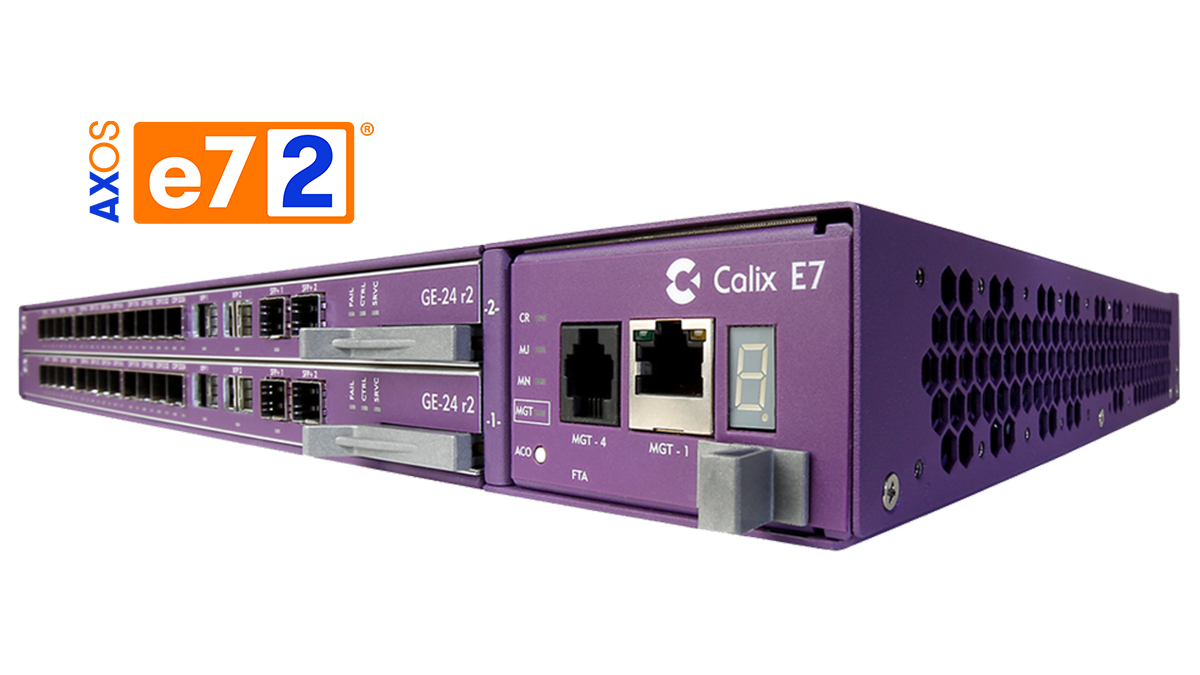
Bring 100G, high-density OLT, aggregation, and subscriber management together to help you transform and simplify your existing or new access network.
Deploy the bandwidth you need now, with the flexibility to easily keep pace with accelerating change.

Eliminate deployment complexity and simplify your business with this multi-faceted FTTH network expansion solution.

Reduce risk, scale your team, and accelerate the deployment of advanced solutions—while overcoming barriers to business transformation.