
Why Deploying AI Too Fast Creates the Operations Problems You Were Trying to Avoid
The fastest path to anoperations team that stops trusting AI is deploying it before defining how they should use it. No triage protocol for AI-generated alerts. No override standard for AI-assisted call summaries. No clear answer to the question every engineer and customer service representative (CSR) eventually asks: when is the AI right, and when do I trust my own judgment instead?
That ambiguity does not resolve itself with time. It compounds. Frontline teams develop individual habits that vary by shift and by person. Alert fatigue sets in. AI outputs get ignored not because the tool failed but because the team was never given the framework to act on them confidently. The deployment looks live. The capability is not being used.
What Moving Too Fast Costs Operations
In network operations and customer service, the consequences of deploying AI without the right preparation show up quickly and are easy to misread as technology problems:
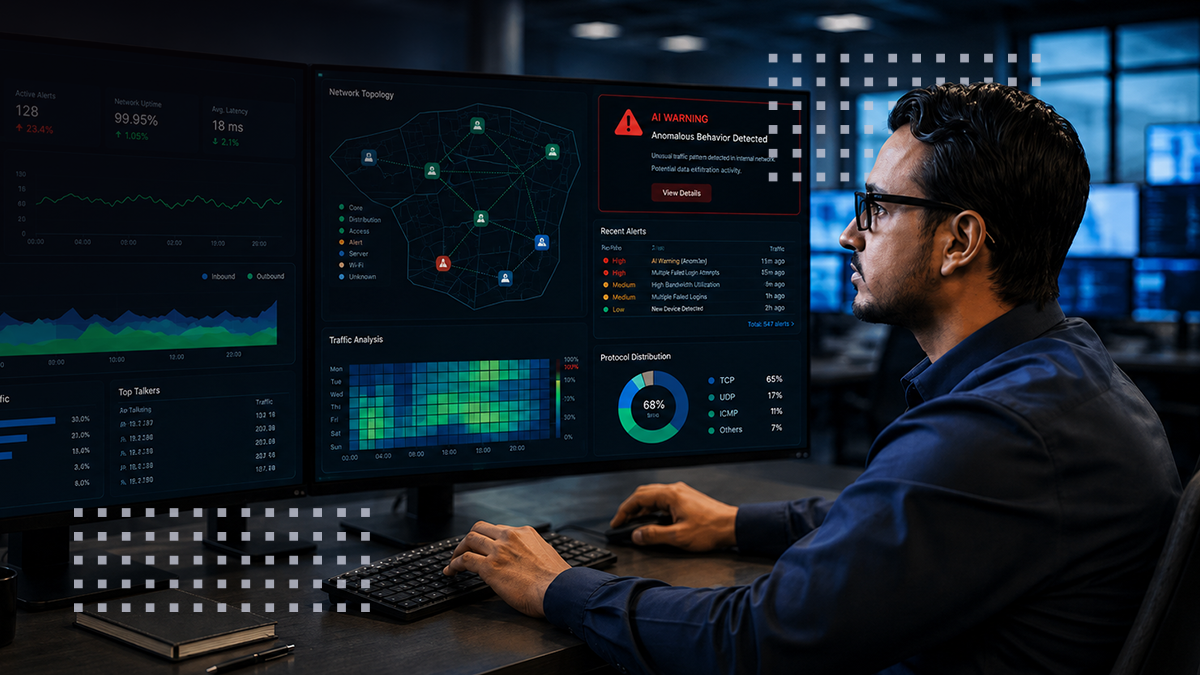
Engineers see AI-generated anomaly alerts but have no protocol for which ones to escalate, which to validate, and which can be acted on immediately, so they treat all of them as low-priority noise
CSRs receive AI-generated call summaries and coaching feedback but are unsure whether to trust them over their own read of the interaction, so they add validation steps that cancel out the efficiency gain
When an AI-influenced decision produces a bad outcome, accountability is disputed rather than resolved quickly because no one defined who owns the decision when AI is involved
New AI use cases proposed by perations sit in a queue with no clear approval path, so teams either work around the process or stop proposing
These are not edge cases. They are the predictable result of moving fast without building the trust layer first. And they are significantly more expensive to fix after deployment than before.
What Going Slow Means for Operations Teams
Going slow is not a pause. It is a deliberate investment in four things before AI scope expands, each of which directly improves the day-to-day operations experience once AI is live.
Clear decision boundaries before go-live. Define explicitly which decisions AI may recommend, which it may initiate, and which must remain human-led. For network ops, this means documented triage standards: which AI-generated alerts require immediate action, which require validation, which can be auto-resolved. For support, this means clear override protocols: when agents should act on AI context and when they should use their own judgment.
Approval thresholds built into the workflow. Human oversight designed into the system from the start, with specific criteria for when review is required before AI takes action. Adding this layer after fragmented adoption has already set in is far more disruptive than building it in from the beginning.
Explicit accountability for AI-influenced decisions. Accountability never shifts to the AI agent. When an AI recommendation drives an action that produces a bad outcome, theoperations leader who authorized that workflow owns the result. Making this explicit, in documented governance, in team meetings, prevents the ambiguity that makes teams hesitate to act on AI output at all.
Knowledge enrichment as an ongoingoperations discipline. Data freshness and accuracy reviewed in regular operating cadences, not treated as a pre-launch checklist. This is what keeps AI output reliable after go-live, when the data it was trained on starts to drift from operational reality.
Each of these investments reduces operational friction after deployment. Teams move faster because the framework exists. Escalation paths are shorter because accountability is clear.
Governance as an Operations Enabler
The concern operations teams often have about governance is that it will slow things down: add approvals, create bottlenecks, make it harder to act on what AI is surfacing in real time. The experience of teams that have built governance well is the opposite.
Governance removes the friction that comes from ambiguity. When the triage protocol exists, engineers do not have to decide individually how to treat each AI signal. When the override standard is documented, CSRs do not have to guess whether to trust AI context or their own read. When accountability is explicit, escalation is fast rather than disputed.
A strong AI governance framework is built around three capabilities that operations teams feel directly: accountability (named owners for AI-influenced decisions), traceability (the ability to understand how a recommendation was produced), and auditability (the ability to review decisions over time and intervene when needed). These are not bureaucratic controls. They are the organizational conditions that allow operations teams to act on AI output with confidence.
Pacing That Matches Operations Readiness
One of the most common mistakes in AI deployment is assuming readiness is uniform across the organization. An executive sponsor who has been engaged in AI planning may be ready to expand scope. The customer service team running the first AI-assisted workflow may not have received any enablement beyond the go-live training.
The AI readiness assessment surfaces these differences before they become operational problems. It gives operations leaders a specific picture of where confidence is strong, where hesitation exists by role and function, and where targeted enablement will have the greatest impact on adoption. That insight makes pacing a deliberate decision rather than an assumption.
The operations teams that build trust in AI output early are the ones that move fastest later. The ones that skip the foundation spend their time managing the friction that results.
What Changes When the Foundation Is in Place
When decision boundaries, approval thresholds, accountability, and data discipline are established before AI scope expands, the operations experience changes concretely. Engineers act on AI signals with confidence because the triage protocol tells them what to do. CSRs use AI context without second-guessing because the override standard is clear. New use cases move through a known approval path rather than stalling in ambiguity.
AI stops being something operations teams work around and becomes part of how the work gets done. That is the outcome of going slow early, and it is what makes sustained operational improvement possible.

Related articles