
Calix Management System
A rich set of tools for network and service configuration, surveillance, performance and administration, delivering full Fault, Configuration, Accounting, Performance and Security (FCAPS) for the complete suite of Calix Unified Access network devices
Overview
A truly integrated solution for service lifecycle management
Service delivery and assurance in the access network is critical for service providers' business success. The ability to manage the full lifecycle of access services is essential for telephone companies and cable operators when deploying deep fiber services.
The Calix Management System (CMS) provides a rich set of tools for network and service configuration, surveillance, performance and administration. CMS enables network and business transformation by delivering legacy services over copper, as well as advanced IP and Ethernet services over fiber and wireless access.
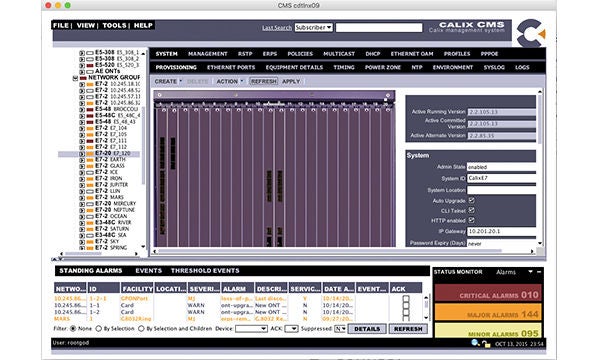

Service configuration and global service profile management

Network configuration of both physical and virtual network deployments

Surveillance, real time and historical alarm and event reporting, and alarm forwarding

CMS and network element configuration backup and restore

Authentication, authorization, and accounting for services as well as network and CMS users

Full FCAPS support for E7-2, E7-20, B6, and C7

Communications service providers can intelligently streamline their network operations and harmonize both subscriber and network data for a true white-glove subscriber experience.

Bring 100G, high-density OLT, aggregation, and subscriber management together to help you transform and simplify your existing or new access network.
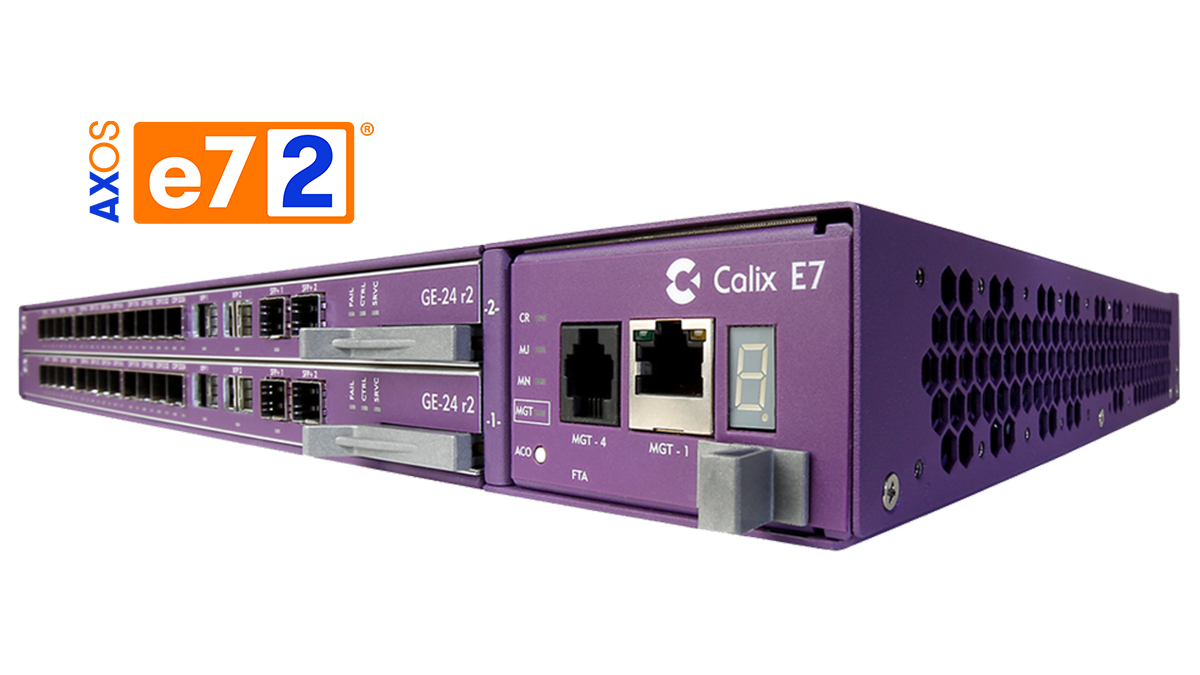
Deploy the bandwidth you need now, with the flexibility to easily keep pace with accelerating change.

Provide Carrier Ethernet business and mobile backhaul services with operational efficiency and service assurance.

Eliminate deployment complexity and simplify your business with this multi-faceted FTTH network expansion solution.

Dramatically simplify your operations through a fully abstracted service layer, hardware independence, common service models and workflows, as well as an always-on environment.

Simplify your service provisioning experience and network management capabilities.

Shorten resolution times for addressing network or service-related problems with the AXOS Diagnostics Toolbox.

Dramatically improve the economics of new services introduction with this virtual environment.

Building blocks designed to ensure a simplified network, whether building a new network or transforming an existing one.

Reduce risk, scale your team, and accelerate the deployment of advanced solutions—while overcoming barriers to business transformation.